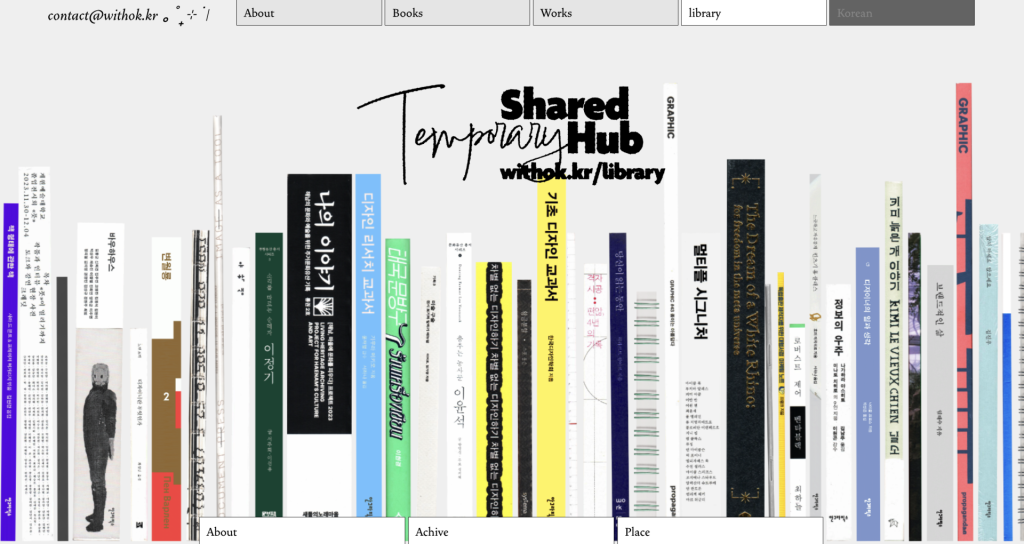
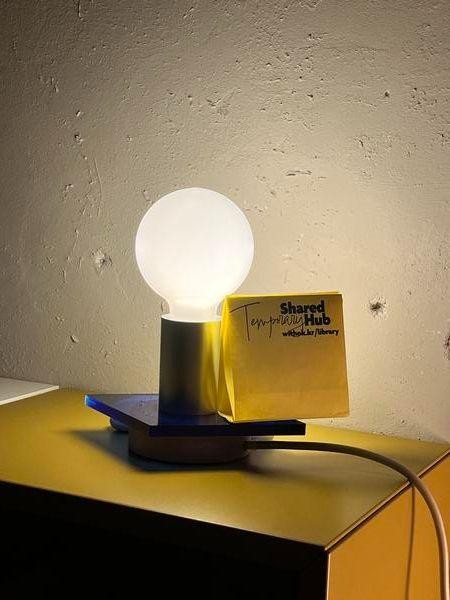
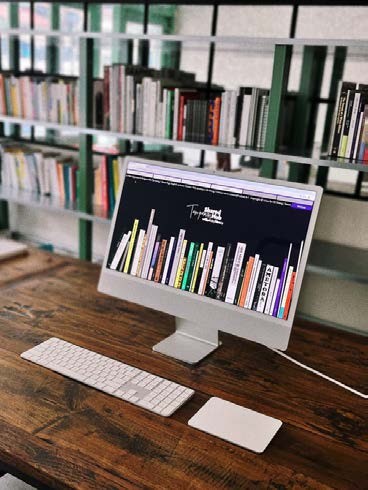
Temporary Shared Hub withok.kr/library 프로젝트는 내가 책을 제작하고 유통하는 일을 하면서 오래도록 느껴 온 불편함과 질문에서 시작되었다. 책을 만드는 과정에서 경험한 감정과 몸의 피로는 단순히 개인의 문제가 아니라, 출판 산업과 디자인 교육, 노동 구조, 계급과 젠더가 얽혀 있는 구조적 문제와 연결되어 있다는 사실을 점점 더 선명하게 드러냈다. 내 책장은 한 사람의 취향을 보여 주는 사적인 공간이 아니라, 그것을 소유한 사람의 사회문화적 배경과 교육, 노동 조건이 켜켜이 축적되어 드러나는 작은 데이터베이스이기도 하다. 즉, 내가 어떤 책을 만들고 어떤 책을 곁에 두는지 자체가 이미 편향된 지식 구조의 일부라는 점을 부인하기 어렵다.
The Temporary Shared Hub withok.kr/library project began with the discomforts and questions I have long felt while producing and distributing books. The emotions and physical fatigue I experienced during bookmaking increasingly revealed that they were not simply personal issues, but were connected to structural problems intertwined with the publishing industry, design education, labor systems, class, and gender. My bookshelf is not merely a private space reflecting an individual’s taste, but a small database where the sociocultural background, education, and labor conditions of its owner accumulate and become visible. In other words, the kinds of books I make and keep close to me are already part of a biased knowledge structure.
이 프로젝트의 출발점은 출판 구조에 내재한 젠더 불균형을 수치와 사례로 확인하는 일이었다. 2021년 Cambridge University Press에서 발표된 논문 New Medium, Same Story? Gender Gaps in Book Publishing은 대학 출판사에서 발행된 책의 약 69퍼센트가 남성 단독 저자의 저작이며 여성 저자의 책은 20퍼센트에 미치지 못한다는 점을 보여 준다. 2022년 Queens College의 연구 Comparing gender discrimination and inequality in indie and traditional publishing 역시 독립출판과 전통 출판 모두에서 성별 불평등이 구조적으로 반복된다는 사실을 지적한다. 이러한 연구들은 남성이 지식을 생산하는 위치를 점유하고, 여성은 편집과 제작, 유통 노동을 중심으로 지식을 지탱하는 역할을 맡는 경향이 광범위하게 존재함을 드러낸다.
The starting point of this project was to confirm, through data and examples, the gender imbalance embedded in publishing structures. A 2021 Cambridge University Press paper, New Medium, Same Story? Gender Gaps in Book Publishing, shows that about 69% of books published by university presses are authored by men alone, while books by women do not reach even 20%. Similarly, the 2022 Queens College study Comparing gender discrimination and inequality in indie and traditional publishing points out that structural gender inequality is repeated in both independent and traditional publishing. These studies reveal a widespread tendency for men to occupy the position of knowledge producers, while women support that knowledge through editorial, production, and distribution labor.
나는 이 통계를 한국의 출판 환경과 내가 참여해 온 디자인 출판물에 겹쳐 보았다. 직접 작업에 들어간 121권의 책을 다시 조사했을 때, 저자의 대부분이 남성이라는 사실을 뒤늦게 깨달았다. 책 표지를 디자인하고 편집을 조율하는 과정에서, 내가 다루는 지식의 출처와 이름이 거의 항상 비슷한 집단에 속해 있었다는 점도 확인하게 되었다. 동시에, 내가 설계한 책과 서가가 특정 계급과 젠더, 국적의 지식을 우선적으로 드러내는 장치였다는 사실을 인식하게 되었다.
I overlaid these statistics onto the Korean publishing environment and the design publications I have worked on. When I reviewed the 121 books I had worked on, I belatedly realized that most of the authors were men. Designing book covers and coordinating editorial processes made me recognize that the sources and names of the knowledge I handled belonged to a very narrow group. At the same time, I came to understand that the books and shelves I designed were devices that prioritized the knowledge of certain classes, genders, and nationalities.
Temporary Shared Hub는 바로 이 지점에서 시작된 실천이다. 책의 물성에 새겨진 권력 구조를 해체하고, 책이 가진 권위와 경직된 위계를 흔들어 보려는 시도로서 기획되었다. 나는 먼저 나의 서가에 꽂혀 있는 책들을 다시 읽으며, 그 안에 포함된 데이터 층위를 정리했다. 어떤 책이 어떤 언어로, 어떤 저자와 출판 구조를 통해 만들어졌는지, 그리고 그 책을 디자인한 나의 노동은 어떤 위치에 놓여 있는지를 추적했다. 이 과정에서 서가는 더 이상 중립적인 수납 공간이 아니라, 지식의 흐름이 특정 방향으로만 편성된 구조라는 생각에 이르렀다.
Temporary Shared Hub emerged as a practice grounded precisely in this realization. It was conceived as an attempt to dismantle the power structures embedded in the physical form of books and to unsettle their authority and rigid hierarchies. I began by rereading the books on my own shelves and mapping the layers of data within them—what languages they were written in, which authors and publishing structures produced them, and where my own labor as a designer was positioned. Through this process, I realized that the bookshelf is not a neutral storage space but a structure that channels the flow of knowledge in particular directions.
그래서 책을 단순히 보관하는 것이 아니라, 서가에서 떼어 내어 다른 환경으로 옮기고 새로운 독자를 만나는 존재로 전환해 보고자 했다. 나는 이 과정을 책이 스스로 독자를 찾아 나서는 구직 활동에 비유했다. 고착된 소유 관계를 잠시 풀고, 책이 다른 맥락과 시간 속에서 다시 읽히도록 하는 것이다. 책들이 새로운 공간에서 재배열되고, 독자가 직접 손에 들고 이동시키는 과정 자체가 기존 출판 구조에 균열을 내는 작은 행위가 되기를 바랐다.
Thus, I wanted to transform books from objects that are merely stored into entities that can be removed from the shelf, moved into new environments, and encounter new readers. I likened this process to a form of job seeking in which books actively search for their readers. By temporarily loosening the fixed ownership relations, books could be read again within different contexts and times. My hope was that the rearrangement of books in a new space, and the act of readers physically picking them up and moving them, would create small fractures within existing publishing structures.
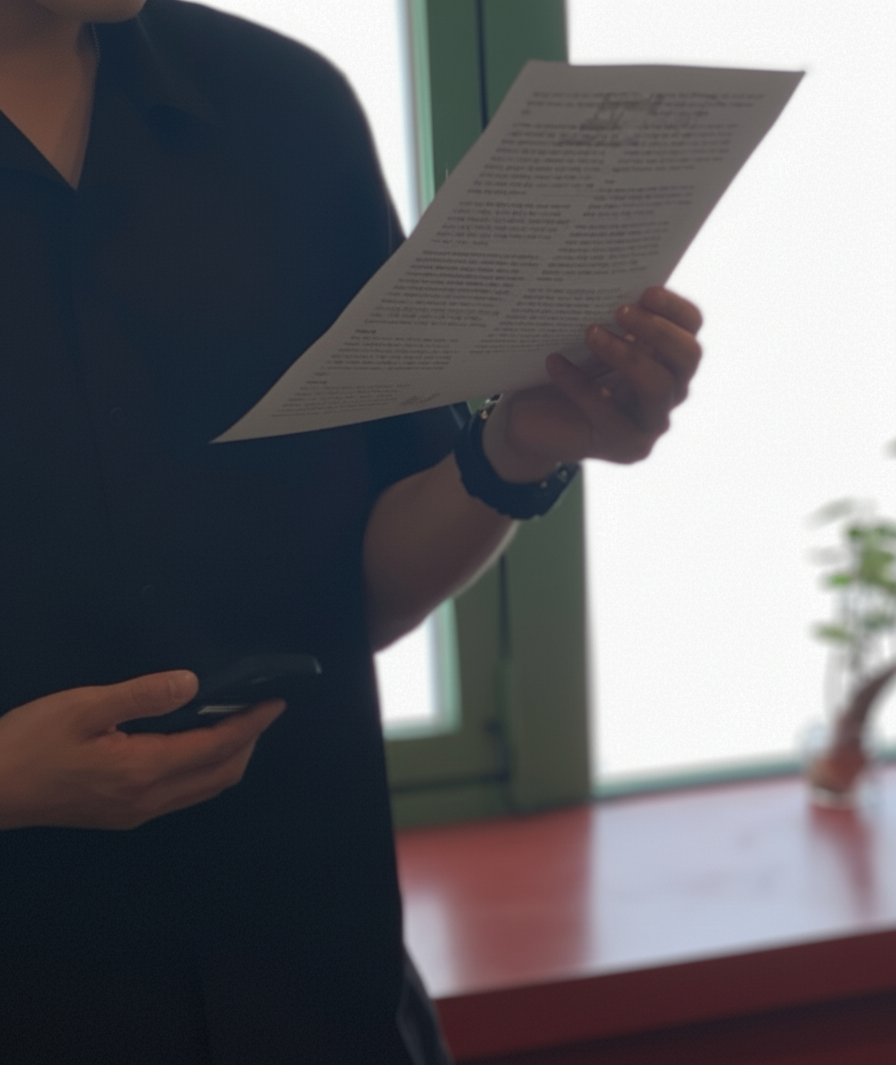
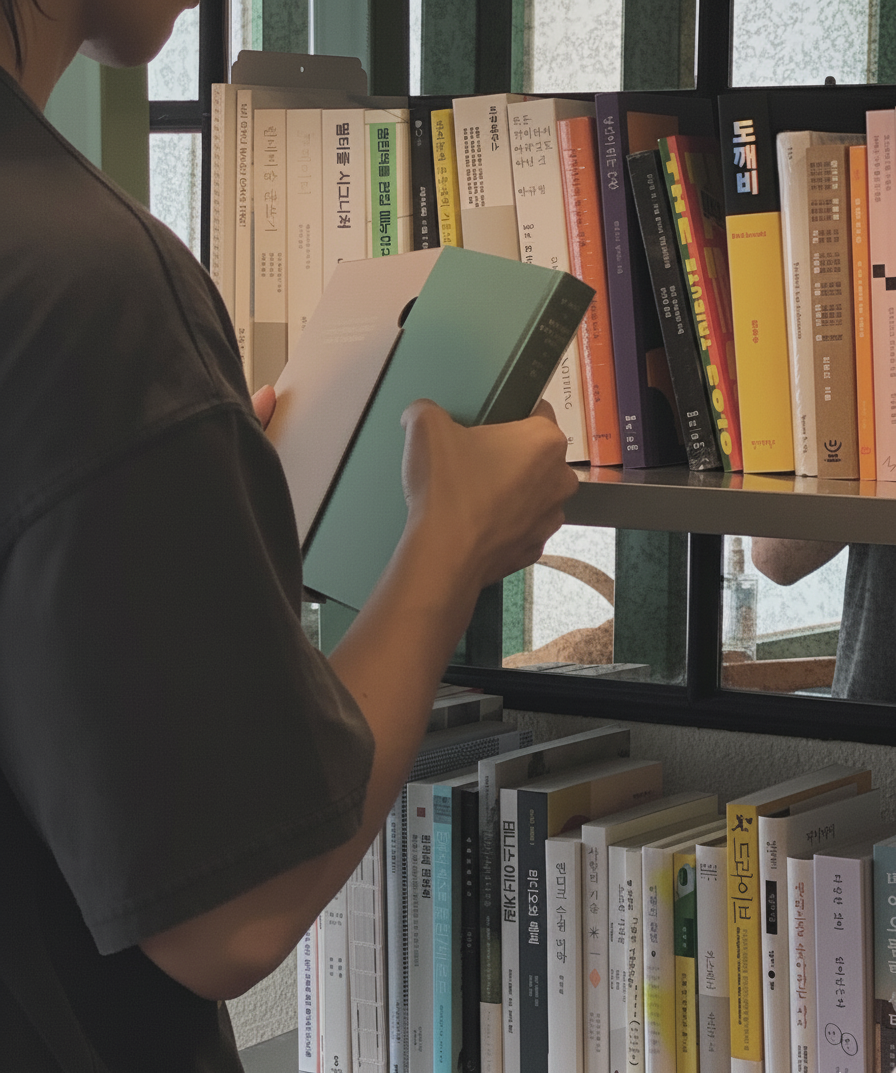
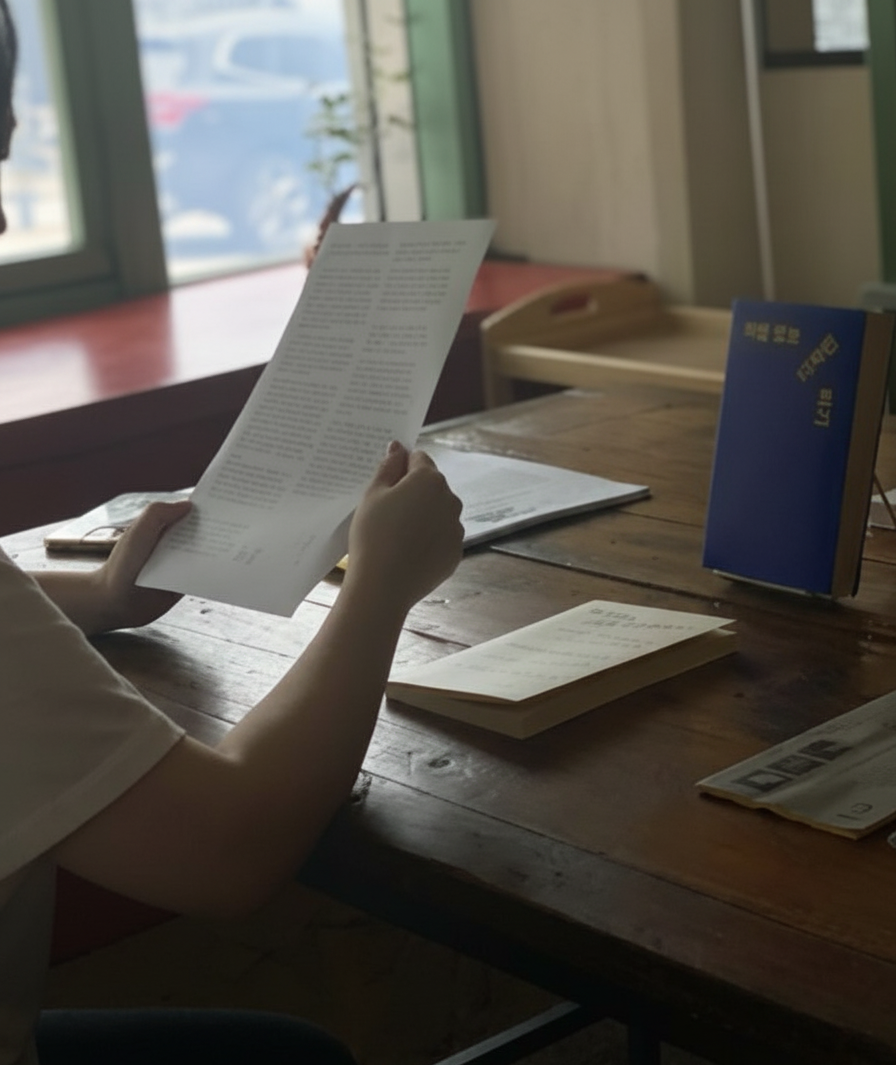
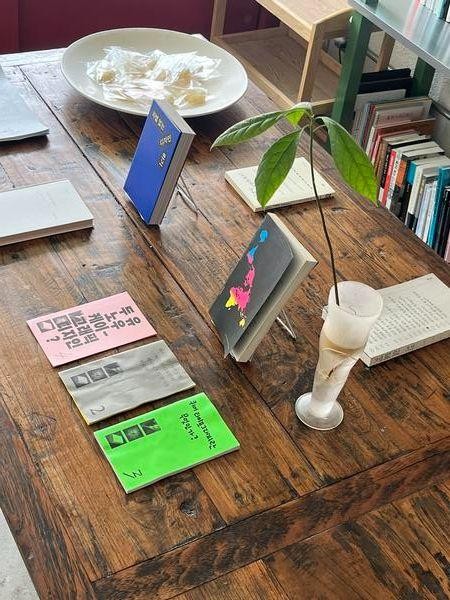
2024년 여름, 이런 고민을 가지고 성동구 독서당로의 Hup라는 공간을 만나면서 Temporary Shared Hub라는 이름의 프로젝트를 구체화할 수 있게 되었다. 2024년 7월 27일과 28일, 서울 성동구 독서당로 286 1층에서 열린 이 프로젝트는 사적인 서가를 임시로 공용의 서가로 전환하는 실험이었다. 나는 그동안 작업하며 모아 온 책과 리서치 자료, 통계 그래프, 저자 구성 다이어그램 등을 가져와 한자리에 펼쳤다. 방문자는 책을 단순히 전시된 오브제로 감상하는 것이 아니라, 자유롭게 열람하고, 책장 배치를 바꾸고, 자신의 동선과 관심사에 따라 새로운 분류를 만들어 볼 수 있었다.
In the summer of 2024, I encountered a space called Hup on Doseodang-ro in Seongdong-gu, which allowed me to concretize the project under the name Temporary Shared Hub. Held on July 27–28, 2024, on the first floor of 286 Doseodang-ro, the project was an experiment that temporarily transformed a private bookshelf into a shared one. I brought the books I had collected through my work, along with research materials, statistical graphs, and author composition diagrams, and laid them out in one space. Visitors were not passive viewers of displayed objects; they were free to browse, rearrange the shelves, and create new classifications based on their own paths and interests.
프로젝트의 또 다른 축은 출판과 디자인을 둘러싼 노동의 문제를 공유하는 대화의 장을 마련하는 것이었다. 두 차례의 공간에서 실험을 이어 가며, 나는 함께 일해 온 디자이너, 편집자, 글쓴이들과 불편했던 경험과 스트레스의 원인, 그리고 출판 현장에서 겪었던 젠더와 계급의 장벽을 구체적으로 나누었다. 그 과정은 내 작업이 공공 디자인으로서 어떤 책임을 가져야 하는지 다시 생각하게 만들었다. 평가와 심사, 공공 디자인 프로젝트에서 요구되는 지표들이 참여자의 경험을 어떻게 소모시키는지, 그리고 그 구조를 재현하지 않는 방식으로 프로젝트를 설계하는 것이 가능한지에 대한 논의도 이어졌다.
Another axis of the project was to create a space for dialogue about the labor surrounding publishing and design. Across two iterations of the experiment, I exchanged concrete stories with designers, editors, and writers I had worked with—stories about discomfort, sources of stress, and the gender and class barriers encountered in the publishing field. These conversations compelled me to reconsider the responsibilities of my work as public design. Discussions also focused on how evaluation systems, judging metrics, and the indicators required by public design projects consume participants’ experiences, and whether it is possible to design projects in ways that do not reproduce those structures.
Temporary Shared Hub는 결과적으로 책이 가진 권위와 서가라는 구조를 잠시 해체하고, 출판 노동과 지식 생산의 관계를 질문하는 임시적인 플랫폼이자 작은 도서관으로 기능했다. 이곳에서 책은 고정된 소유물이 아니라, 서로 다른 사람과 시간, 감정을 통과하며 계속해서 의미가 갱신되는 매개체가 된다. 또한 출판 현장에서 배제되거나 주변화되어 온 목소리를 앞으로 가져와, 누구의 이름이 지식 생산의 표면에 남고 누구의 노동이 배후로 밀려나는지 질문하는 계기를 마련했다.
Temporary Shared Hub ultimately functioned as a temporary platform and small library that dismantled, even if briefly, the authority of books and the structure of the bookshelf, while questioning the relationship between publishing labor and knowledge production. Here, books ceased to be fixed possessions and instead became mediators whose meanings continue to shift as they pass through different people, times, and emotions. The project also brought forward voices that had been marginalized or excluded in publishing, raising questions about whose names remain on the surface of knowledge production and whose labor recedes into the background.
이 프로젝트가 완성된 답을 제공한다고 생각하지는 않는다. 다만 내가 속한 출판과 디자인 환경, 그리고 나 자신이 지식을 다루는 방식에 작은 변화를 시도한 기록이라고 믿는다. Temporary Shared Hub 이후에도, 나의 서가와 작업 공간이 특정한 집단만을 대표하는 장치로 머무르지 않도록 지속적으로 점검하고 수정해 나가고자 한다. 이 과정에서 함께 이야기하고 책을 옮기고 공간을 채워 준 모든 동료와 방문자에게 깊이 감사한다.
I do not believe that this project offers a complete answer. Rather, I view it as a record of my attempt to introduce small changes to the publishing and design environments I inhabit, and to my own way of handling knowledge. Even after Temporary Shared Hub, I intend to continually examine and adjust my shelves and workspace so they do not remain devices that represent only certain groups. I am deeply grateful to all colleagues and visitors who talked, moved books, and helped shape the space throughout this process.
스크롤 아래로
Scroll down