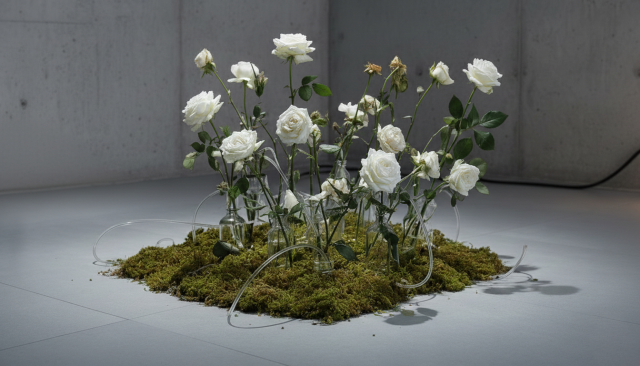
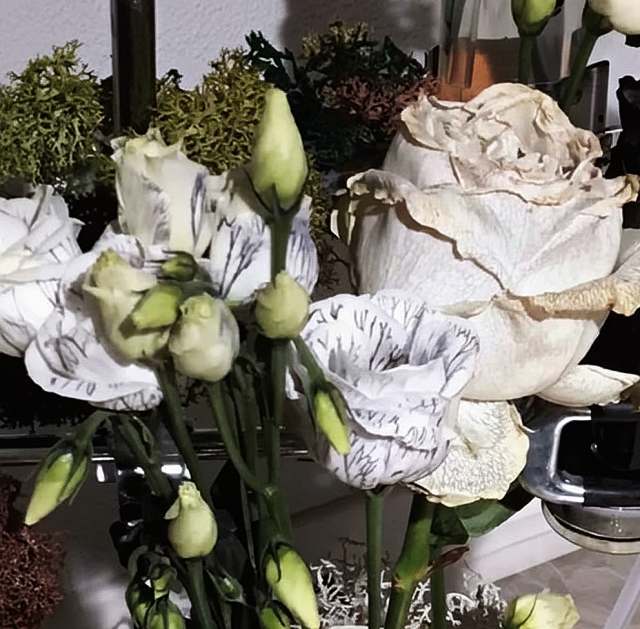
Water Council of Relationality(WCoR)은 물을 단순한 자원이나 기술 인프라의 보조 요소로 보지 않고, 환경적·사회적·정치적 관계 속에서 작동하는 살아 있는 행위자로 바라보기 위한 협업형 연구 프로그램이다. 이 프로젝트는 네덜란드의 전통적인 물 관리 기관인 water councils가 물을 관리와 통제의 대상으로 다뤄온 역사적 관점을 비판적으로 검토하며, 오늘날 물 문제가 더 이상 지역적 차원에 머물지 않고 세계적이고 복잡한 조건 속에서 작동하고 있음을 전제로 한다.
Water Council of Relationality (WCoR) is a collaborative research program that approaches water not as a simple resource or technical component, but as an active agent operating within environmental, social, and political relations. The project critically revisits the historical perspective of Dutch water councils, which have traditionally treated water as an object of management and control, and instead considers how contemporary water issues have expanded beyond local concerns into complex global conditions.
It critically reflects on the historical role of traditional Dutch “water councils,” which have treated water as something to be controlled and managed, and instead responds to the reality that contemporary water issues are no longer local but global, interconnected, and increasingly complex.
From September to December 2024, fifty-five students from the Social Design MA program at Design Academy Eindhoven and the Institute of Applied Arts at National Yang Ming Chiao Tung University in Taiwan took part as a fictional council, exploring our relationship with water through multiple lenses—politics, infrastructure, memory, media, sexuality, and more-than-human worlds.

Water Council of Relationality(WCoR)은 물을 단순한 자원이나 기술 인프라의 보조 요소로 보지 않고, 환경적·사회적·정치적 관계 속에서 작동하는 살아 있는 행위자로 바라보기 위한 협업형 연구 프로그램이다. 이 프로젝트는 네덜란드의 전통적인 물 관리 기관인 water councils가 물을 관리와 통제의 대상으로 다뤄온 역사적 관점을 비판적으로 검토하며, 오늘날 물 문제가 더 이상 지역적 차원에 머물지 않고 세계적이고 복잡한 조건 속에서 작동하고 있음을 전제로 한다. 2024년 9월부터 12월까지 진행된 이 프로젝트에는 Design Academy Eindhoven의 Social Design 석사 과정과 대만 National Yang Ming Chiao Tung University의 학생 55명이 참여했다. 참여자들은 가상의 물 위원회를 구성하고 정치, 인프라, 기억, 미디어, 섹슈얼리티, 그리고 인간 이외의 존재들을 포함하는 확장된 생태계 등 다양한 관점을 통해 물과 인간의 관계를 다시 탐구했다.
Water Council of Relationality (WCoR) is a collaborative research program that approaches water not as a simple resource or technical component, but as an active agent operating within environmental, social, and political relations. The project critically revisits the historical perspective of Dutch water councils, which have traditionally treated water as an object of management and control, and instead considers how contemporary water issues have expanded beyond local concerns into complex global conditions. From September to December 2024, fifty-five students from the Social Design MA program at Design Academy Eindhoven and from the Institute of Applied Arts at National Yang Ming Chiao Tung University participated in the project. Together they formed a fictional water council and explored the relationship between humans and water through multiple lenses, including politics, infrastructure, memory, media, sexuality, and expanded ecological perspectives that include more-than-human worlds.
WCoR은 물을 둘러싼 권력 구조, 기술 인프라, 감각적 경험이 서로 어떻게 교차하며 사회적 현실을 형성하는지 질문한다. 물은 생존을 위한 기본 조건인 동시에 특정 지역을 발전시키거나 소외시키는 정치적 장치로 작동하기도 한다. 이 프로젝트는 물을 새로운 관계망의 중심에 놓고, 그 주변에서 발생하는 감각적·정치적 변화를 추적하려는 시도였다.
WCoR asks how power structures, technological infrastructures, and sensory experiences intersect around water to shape social reality. Water functions both as a basic condition of survival and as a political force capable of developing or marginalizing particular regions. The project places water at the center of relational networks and traces the political and experiential shifts that emerge around it.
이러한 맥락에서 진행된 그의 작업 Hidden Reality of Water Usage는 물과 기술 인프라가 교차하는 지점을 탐구한다. 연구는 데이터 센터의 물 사용이 지역 사회와 환경에 미치는 영향에 대한 질문에서 출발했다. 클라우드라는 비물질적인 언어 뒤에 감춰져 있던 데이터 인프라를 물질적이고 환경적인 문제로 다시 바라보고자 했다. 우리는 사진을 저장하거나 영상을 스트리밍할 때 데이터를 가볍게 떠다니는 정보처럼 상상하지만, 실제로는 막대한 양의 물과 에너지가 지속적으로 소비된다. 이 작업은 이러한 보이지 않는 물적 비용을 추적하며 데이터 인프라가 지역 자원을 전유하고 권력을 집중시키는 정치적 구조임을 드러낸다.
Within this framework, their work Hidden Reality of Water Usage investigates the point where water and technological infrastructure intersect. The research began with questions about how data centers' water consumption affects local communities and surrounding environments. The project aims to reconsider data infrastructure—often hidden behind the immaterial language of the "cloud"—as a material and environmental issue. While digital activities such as storing photos or streaming videos are often imagined as weightless flows of information, they rely on the continuous consumption of vast amounts of water and energy. The work traces these invisible material costs and reveals how data infrastructure operates as a political structure that appropriates local resources and concentrates power.
리서치 과정에서 특히 주목한 것은 '물 식민지화' 현상이다. 데이터 센터는 인구 밀도가 낮거나 경제적으로 소외된 지역에 집중적으로 설치되는 경우가 많다. 이러한 지역은 규제와 감시가 상대적으로 느슨하고 기업 활동에 대한 사회적 저항도 적기 때문이다. 기업들은 재생에너지 사용과 물 재활용을 강조하며 친환경 이미지를 내세우지만, 실제로는 냉각 과정에서 대량의 물을 소비하고 그 부담은 지역 사회로 전가된다. 이 과정에서 정보 식민지화와 물 식민지화가 동시에 작동하는 구조가 나타난다.
During the research process, particular attention was given to the phenomenon of water colonization. Data centers are frequently installed in sparsely populated or economically marginalized regions, where regulatory oversight is weaker and social resistance to corporate activity is limited. Companies often promote environmentally friendly narratives by emphasizing renewable energy or water recycling, yet in practice large volumes of water are consumed during cooling processes, and the resulting ecological burdens are transferred to local communities. Within this structure, forms of information colonization and water colonization occur simultaneously.
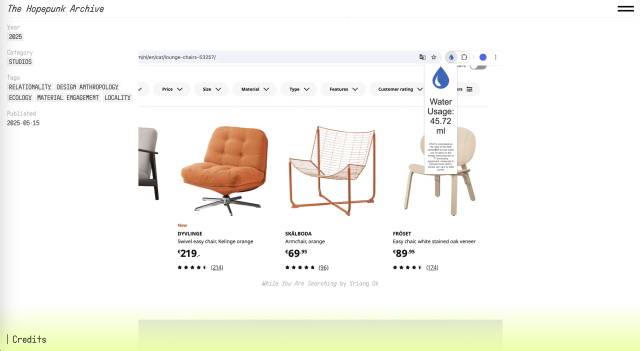
이 연구를 기반으로 그는 크롬 브라우저 확장 프로그램을 제작했다. 이 도구는 사용자의 일상적인 온라인 활동에서 발생하는 디지털 물 발자국을 실시간으로 시각화한다. 스트리밍, 클라우드 서비스, 웹 검색, 소셜 미디어와 같은 일상적인 디지털 소비가 얼마나 많은 물을 소모하는지를 구체적인 수치로 보여주며, 보이지 않던 인프라의 물질적 비용을 감각적으로 인식하게 한다. 이 도구는 단순한 측정 장치를 넘어 디지털 소비를 하나의 정치적 성찰의 장으로 전환한다.
Based on this investigation, they developed a Chrome browser extension that visualizes the digital water footprint generated by everyday online activity. The tool displays, in real time, how much water is consumed through activities such as streaming services, cloud storage, web searches, and social media use. By presenting these figures concretely, the extension makes the hidden material costs of digital infrastructure perceptible and encourages users to recognize the environmental consequences of their digital habits. Rather than functioning merely as a measurement device, the tool transforms digital consumption into a site for political reflection.
Hidden Reality of Water Usage는 결국 하나의 질문으로 돌아간다. 우리가 당연하게 누리는 디지털 편의는 누구의 물 위에 세워져 있는가. 이 질문을 통해 작업은 WCoR이 다루는 물의 정치성과 관계성을 기술 인프라의 영역으로 확장하며, 디지털 시스템 뒤에 숨겨진 물의 현실을 드러내는 하나의 실천적 제안으로 자리한다.
Ultimately, Hidden Reality of Water Usage returns to a single question: on whose water does our digital convenience depend? Through this question, the work extends WCoR's exploration of the politics and relationality of water into the domain of technological infrastructure, revealing the hidden realities that underpin contemporary digital systems.